Dubai Chocolate Broke the Internet. Shahi Tukda Was Doing It First.
/ by shiva@chicagotechsolution.com
By now, you’ve almost certainly seen it: a thick bar of chocolate gets cracked open on camera, revealing a bright green, crunchy-creamy pistachio-kunafa filling stretching between the two halves. That’s Dubai chocolate, and it has been, without exaggeration, one of the single biggest food phenomena of the last two years. Millions of posts. Grocery store shortages. Copycat versions from every chocolate brand willing to chase the trend. People have genuinely stood in line for hours just to get their hands on one bar.
And look, we get the appeal. Crunchy kunafa, creamy pistachio, that satisfying crack-and-pull moment — it’s a genuinely great combination. But every time one of these videos crosses our feed at Hyderabad Kitchen, we can’t help but think the same thing: we’ve been eating this exact flavor profile for generations. It’s just called shahi tukda, and it’s been quietly perfect since long before anyone thought to wrap it in chocolate.
Let’s talk about what actually makes Dubai chocolate work
Strip away the packaging and the hype, and Dubai chocolate’s appeal comes down to a handful of specific things: crunch against cream, nutty pistachio flavor, a rich buttery base, and a visual “reveal” moment that’s satisfying to watch. It’s built on kunafa, the shredded phyllo pastry that’s toasted in butter until deeply golden and crisp, then layered with a sweet pistachio cream. That contrast of textures is really the whole game.
Now hold that thought, and let’s talk about shahi tukda.
Meet the dessert Dubai chocolate is quietly borrowing from
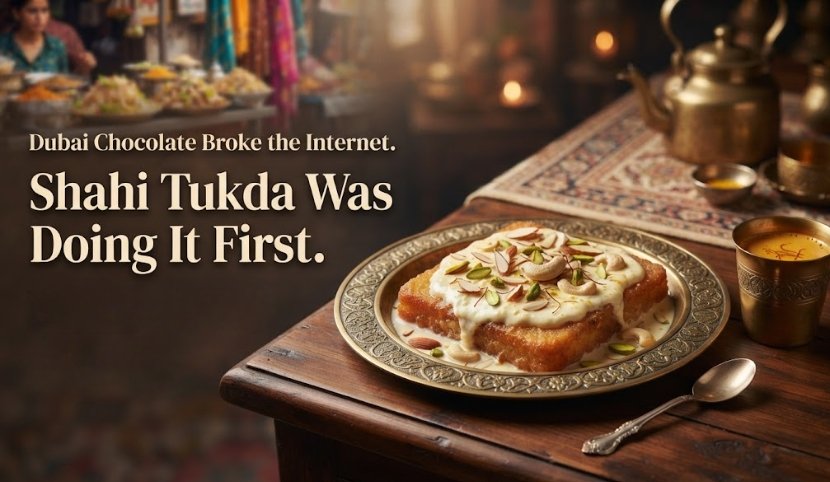
Shahi tukda — literally “royal piece” — is a classic Hyderabadi dessert that’s been served at celebrations, weddings, and Eid gatherings for generations. It starts with bread, sliced and deep-fried or ghee-fried until the edges turn deep golden and shatteringly crisp. Those fried pieces are then soaked just enough to stay structured, and topped with a generous pour of rabri — a thick, slow-reduced sweetened milk that’s been simmered for hours until it thickens into something closer to a custard than a sauce. The whole thing is finished with a scatter of chopped pistachios, slivered almonds, and a thread of saffron.
Sound familiar? Crunchy fried base, rich creamy top layer, pistachio finish, saffron aroma instead of cardamom-vanilla — it’s the same sensory formula that’s driving Dubai chocolate’s virality, just built from a completely different culinary tradition, and honestly, with a lot more depth. Where Dubai chocolate is essentially a single crunch-cream contrast, shahi tukda layers in the caramelized edges of fried bread, the slow-cooked richness of reduced milk, and the toasted, fragrant finish of saffron and cardamom. It’s not one texture moment — it’s three or four happening at once.
The “pour” is just as satisfying as the “crack”
Part of what makes Dubai chocolate so filmable is that reveal moment — the crack, the stretch, the pull. Shahi tukda has its own version of that same drama: the pour. Watching thick, warm rabri cascade over a plate of golden fried bread, slowly soaking into the crisp edges while staying pooled and glossy on top, hits a lot of the same visual notes. It’s rich, it’s decadent, and it photographs (and films) beautifully, especially with that final scatter of pistachio and a few strands of saffron settling into the cream.
If Dubai chocolate can build an entire trend around a single crack-and-pull clip, we genuinely believe shahi tukda deserves its own moment in that same spotlight — it’s just been sitting in dessert menus rather than dessert reels.
Double ka Meetha: shahi tukda’s rustic cousin
Worth a quick mention here too: double ka meetha, another Hyderabadi classic, is closely related to shahi tukda but leans even more into comfort-food territory. “Double” refers to bread (a nod to the British-era double roti), and this version usually skips the deep-fry in favor of a gentler ghee-fry, soaks the bread a bit more fully in a lightly spiced sugar syrup, and layers rabri or khoya generously on top. It’s softer, richer, and arguably even more indulgent than shahi tukda — think bread pudding, but if bread pudding grew up in the Deccan with cardamom, saffron, and reduced milk instead of cinnamon and custard.
Both desserts share the same DNA that’s making Dubai chocolate a global sensation: contrast, richness, nuts, and a fragrant finish. The difference is these dishes were perfected over centuries in Hyderabadi kitchens, not engineered for a 15-second clip.
Why we think this trend has real staying power
Viral food trends usually burn out fast because they’re often built around novelty rather than substance — a strange combination, a shocking visual, something people try once out of curiosity and rarely order again. Dubai chocolate has managed to stick around longer than most because underneath the hype, the actual flavor combination genuinely works. That’s exactly why we think shahi tukda and double ka meetha have real potential to catch on with a wider American audience right now. The formula that’s currently driving people wild — crunch, cream, pistachio, that rich reveal moment — isn’t unique to one dessert. It’s a flavor combination Hyderabadi kitchens have already spent centuries getting right.
Come taste the original version of the trend
Next time Dubai chocolate shows up on your feed, consider this your invitation to try where that flavor combination actually comes from. Order a plate of shahi tukda at Hyderabad Kitchen, watch the rabri get poured tableside if you can, and taste a version of “crunchy meets creamy meets pistachio” that’s been perfected over generations rather than a single viral season. We think it might just become your new favorite dessert — trend or no trend.
Hyderabad Kitchen Near Devon Ave Faq's
What is shahi tukda made of?
A: Shahi tukda is made from fried or ghee-fried bread topped with rabri (a slow-reduced, thickened sweetened milk), finished with chopped pistachios, almonds, and saffron.
What's the difference between shahi tukda and double ka meetha?
A: Shahi tukda tends to use deep-fried bread with rabri poured on top for a crisper texture, while double ka meetha soaks ghee-fried bread more fully in spiced sugar syrup and layers it with rabri or khoya for a softer, pudding-like result.
Is shahi tukda very sweet?
It’s a rich, indulgent dessert with a pronounced sweetness from the rabri and syrup, balanced by the nutty, toasted flavors of pistachio, almond, and saffron.
Can shahi tukda be made without nuts, for allergies?
Yes, the nut garnish can typically be left off or substituted — just let our staff know about any allergies when you order.
Is shahi tukda served warm or cold?
It can be enjoyed either way, though it’s traditionally served warm to slightly warm, letting the rabri soak gently into the crisp fried bread.